-

·
A week’s worth of questions about paid leave
Paid leave. The long form in Japanese is nenji yūkyū kyūka; the short form is yūkyū. For workers, yūkyū is a day of “complete liberation from toil,” as one scholar put it. The right to rest fully is vital in ensuring that workers enjoy long, healthy and anxiety-free lives. Unfortunately, some employers do all they can to…
-
·
‘Same work, same pay’ goal may spark a race to the bottom
Prime Minister Shinzo Abe has recently come out to make the case for “same work, same pay.” Call me a cynic, but I suspect an ulterior motive. For years, the ruling Liberal Democratic Party’s policies have focused on helping prop up struggling corporations and their managers, with working people treated as more of a nuisance.…
-

·
Shakai hoken shake-up will open up pensions for some but close door on benefits for others
June 6, 1980, was a Friday. The Social Insurance Agency quietly issued an untitled internal memo called a naikan regarding the eligibility of part-timers in Japan’s shakai hoken health and pension program. Who could have known what chaos, confusion and frustration that single-page document would cause in the coming decades? Let’s get our hands dirty and dig through the…
-
·
Bearded train driver, out-of-pocket teacher and CV faker: How would they fare in court?
Today, let’s take a look at three shiny new news items from the gossip columns that take on a different sheen when examined under the piercing light of labor law. These human-interest stories have a common theme, which I’ll address later. But first, the stories:
-
·
‘Landmark’ ruling sent Japan’s foreign residents back to welfare limbo
This month’s Labor Pains is not really about a labor issue per se. The life of a worker is more than work. We don’t toil from cradle to grave. There are times when we cannot work due to sickness or injury, although in Japan, many force themselves to labor through both, as indeed my translator…
-
·
Graduates needn’t be hostages to advance contracts
The seniors I teach at Sagami Women’s University have already handed in their final dissertations and now await graduation in March. You can feel that a heavy burden has been lifted from their shoulders: “My friends and I are going to Fiji for our graduation trip”; “I’ve already reserved the traditional gown I’m going to…
-
·
改めて考える・・・「労働者にとってのストライキ」〜ストライキにどこか「罪悪感」を感じているすべての人へ〜
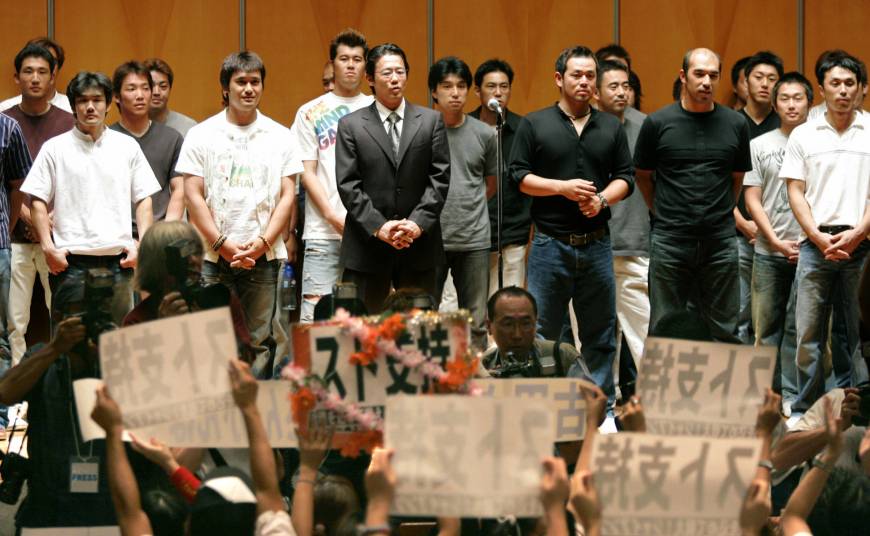
今から11年前、日本のプロ野球は、日本プロ野球球団設立以来初めてのストライキを行った。当時最大規模の「球界再編」が行われようとしていたが、その決定のプロセスのなかに「選手」は入っていなかった。自分たちのことなのに、なぜ自分たちが外されているのか…? 我慢ができなかった選手たちは、当時の選手会会長である古田敦也(ふるた あつや)氏を中心に、何回も団体交渉を重ねたものの、交渉は決裂。そしてついに、開催予定だった6つの試合でストライキが決行された。 ストライキは2日に及んだが、この間、選手たちは自主練習をしたり、ファンとのふれあいのイベント(サイン会や写真撮影会)を開催したりしていた。彼らのストライキに対しては、ほとんどのファンがストライキを支持し応援していたものの、なかには「ファンをないがしろにしている」、「自分たちだけよければいいのか」といった非難もあった。選手たちはおそらくこうした声を重く受け止めていたのだろう。彼らは、ストライキが苦渋の果ての決断であったということ、そして、決してファンを軽視するものではなく、むしろファンにとってより楽しいプロ野球にするためにも、ストライキが不可避であるといったことを、一生懸命にアピールしていた。
-
·
In Japan, adultery can cost you your job as well as your marriage
Fūkibinran. Now that is a Japanese expression you don’t see around much these days. I bet many young Japanese readers don’t even know how to read the four kanji that make up this word: 風紀紊乱. It means something akin to “an affront to public morality,” “a breakdown in customary discipline” or, perhaps, “compromising love relations.”…
-
·
Legal change will make temp purgatory permanent for many Japanese workers
Eight years ago, a TV drama about temporary workers generated a great deal of excitement around Japan. In “Haken no Hinkaku” (“Dignity of a Temp”), model-actress-singer Ryoko Shinohara played Haruko Omae, a “super-temp” who masterfully tackled the myriad troubles that arose in her ¥3,000-an-hour job. Unshakable, aloof and playing by her own rules, she performed…
-
·
「ハケン」という働き方って…
もう8年前のことになるが、かつて「ハケンの品格」というテレビドラマが反響を呼んだ。篠原涼子(しのはら りょうこ)が演じる時給3000円の「Super 派遣労働者」大前春子(おおまえ はるこ)が、職場で起こるさまざまなトラブルを鮮やかに解決していくというストーリーだ。大前春子は、職場のどの正社員より仕事ができる一方で、「残業しない」「愛想がない」「就業時間以外のつきあいは一切お断り」がマイルール。愛想笑いもご機嫌取りも一切なく、職場で孤高の存在を貫いていた。こうした大前春子の姿に、当時派遣で働く労働者たちは大いに元気づけられ、大人気ドラマとなった。 しかし、「ハケンの品格」は、ある意味で現実離れした「ファンタジー」として見られていたと言える。当時、ドラマを見ていた派遣で働く人たちに「このドラマはリアルだと思いますか」と質問したところ、ほとんどが「思わない」と答え、「実際に大前春子みたいな派遣社員がいたら、即クビになっちゃう。」「派遣は正社員より軽く扱われるのが当たり前ですよ。」「いくらスキルを磨いて仕事ができるようになっても、いつまでたってもしょせんは「よそ者」なんですよ、派遣って。」等々の発言が相次いだという。